
Lawn Care Answering Service: Stop Losing Spring Mowing Calls (2026)
Lawn care answering service for small crews: capture mowing quotes while you are on the mower, book property visits, and see what coverage costs in 2026.
Lawn Care Answering Service: Stop Losing Spring Mowing Calls (2026)
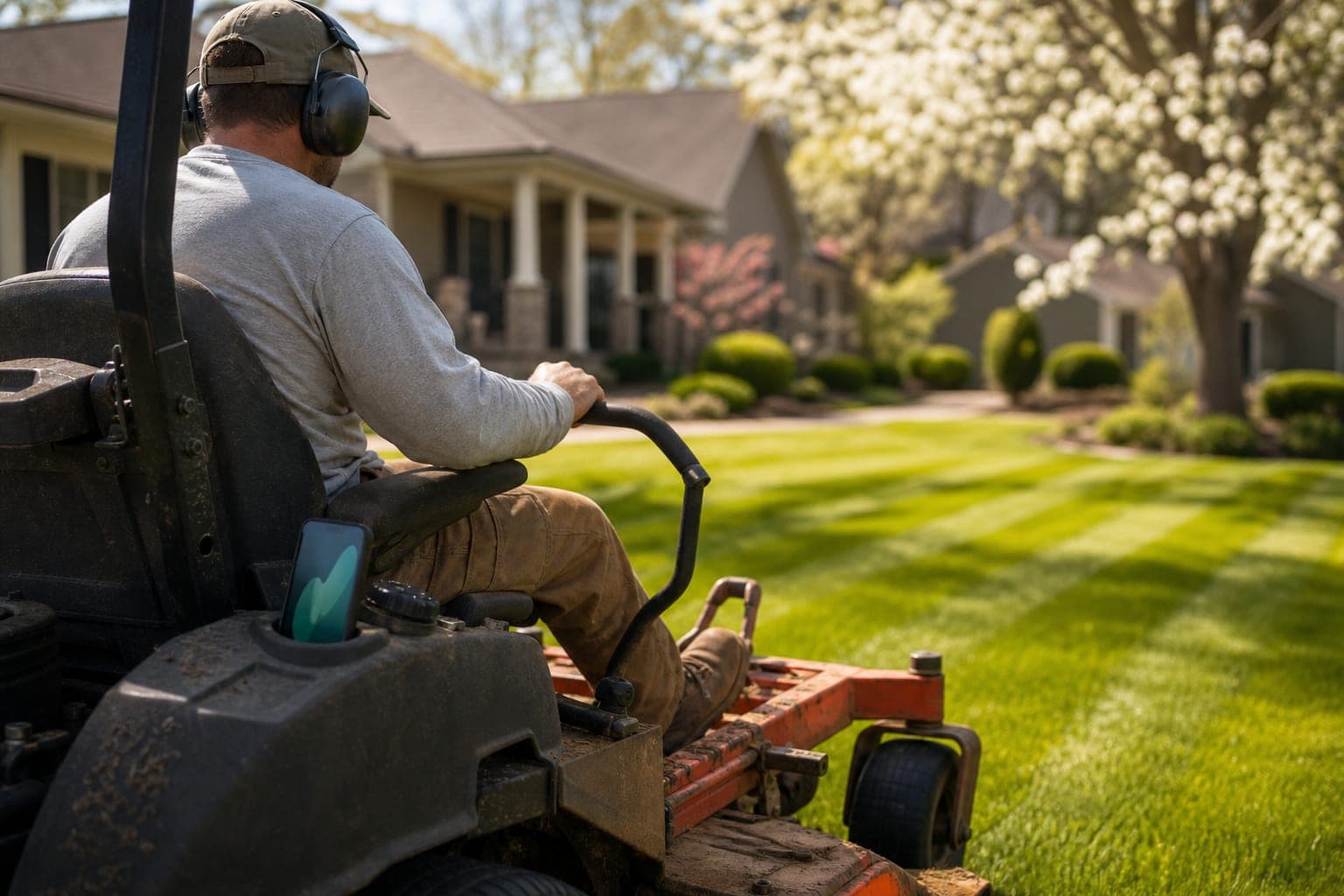
Picture this: it is the first warm Saturday in April. You finish your fourteenth mow of the day, roll the zero-turn onto the trailer, take off your ear protection, and check your phone. Eleven missed calls. Three voicemails. You call the first number back by 6 PM, but the homeowner already hired the teenager down the street. By Monday, most of the rest have moved on. That one Saturday could easily cost more in lost weekly mowing contracts than a month of a lawn care answering service would have charged.
Spring is often when lawn care companies lose the most calls, because it is when the phone rings most and when you are least able to answer it. A homeowner asking "can you do weekly mowing starting next week" is not going to wait for a callback. They call the next number, and your route does not grow that day.
A lawn care answering service answers every call while you are on the mower, asks for the address, lot size, mowing frequency and start date, quotes the price range you set or books a property visit, and texts you a summary. Live services bill per minute or in minute buckets (PATLive, for example, is around $235/mo for 75 minutes - PATLive pricing), while an AI service like Callbook starts at $79/month with 250 minutes included.
If you run a full landscaping company rather than a mowing-focused crew, start with our landscaping answering service guide and the landscaping industry page. This post is about weekly mowing and seasonal quote calls.
Why lawn care companies need phone coverage
What an answering service for lawn care should do
Instant answer, 24/7
The service needs to answer at 7 AM on a Tuesday when a commercial property manager calls, and at 6 PM on Saturday when a homeowner finishing their weekend thinks about their lawn. Answering on the first or second ring keeps the caller from hanging up and calling someone else.
Capture quote details without a callback
Ask for lot size or a description, whether they want weekly or biweekly mowing, the start date they have in mind, and any extras like fertilization or cleanup. That detail lets you give a price range immediately or offer a quick property look before someone else picks up the phone.
Book or confirm on the call
A caller who hears "you're booked for a property visit Tuesday at 10 AM" hangs up satisfied. A caller who hears "I'll have someone call you back" hangs up uncertain and keeps shopping. For more on how booking works, see our appointment scheduling service page.
Lawn care answering service options in 2026
Live call center
How it works: A human operator at a call center answers your line and takes a message or quotes a price.
What you pay: Live human services bill per minute or in minute buckets. For example, PATLive runs around $235/mo for 75 minutes and about $2.00-$2.60/min after that (PATLive pricing).
Pros: A real voice; can answer a customer question about services on the fly.
Cons: Live plans bundle a fixed number of minutes, so a spring spike can push you into per-minute charges. Booking onto your calendar is often not included or costs extra - Davinci Virtual, for example, puts scheduling on its Premium tier (Davinci Virtual details) - so ask before you sign up.
Lawn care virtual receptionist
How it works: A remote receptionist answers during set hours, then takes messages or books if your plan includes it.
What you pay: Ruby is around $235+/mo for 50 minutes and about $4.70/min after (Ruby pricing). Moneypenny is quote-based, roughly $99-$165/mo for small minute or call buckets (Moneypenny pricing).
Pros: A real person, which sounds more personal than a recording.
Cons: Ruby, for example, charges extra for 24/7 coverage, so after-hours calls can add to the bill.
AI answering service
How it works: Software answers instantly, asks about lot size and frequency, gives a price range or books a property look, and texts you a summary.
What you pay: Callbook Starter is $79/month with 250 minutes included. The base price is the same every month; minutes past the included amount cost $0.40 each, with no setup fee and no night or weekend surcharge.
Pros: Answers at any hour; asks for the details you configure - for example address, lot size, frequency and start date - on each call; books onto your Google Calendar (Google Calendar integration).
Cons: Callbook works with Google Calendar only (no route or field-service software integration), leaves a flat buffer after each job rather than calculating drive time, and does not take payments on calls. It quotes only the price ranges you set and does not see the property, so a bigger or oddly shaped lot may still need you to look at it before a firm price. You also need to keep your calendar current.
Voicemail
How it works: The phone rings, no one answers, the caller hears a recording.
What you pay: Nothing beyond your phone bill.
Cons: On a busy spring Saturday, the caller who gets voicemail calls the next lawn service in the search results. This can be the most costly option, because each missed call may be a lost recurring customer.
Lawn care answering services compared
Prices below are approximate - check each provider's site for current pricing.
| Provider | Type | Pricing | Notes |
|---|---|---|---|
| MAP Communications | Live, employee-owned | Pay As You Go about $49/mo + about $1.37/min; Business about $179/mo for 125 min | MAP Communications pricing breakdown |
| AnswerConnect | Live human, no bots | Around $325/mo for 100 min, about $1.30+/min | Setup fee; AnswerConnect vs Callbook |
| Dialzara | AI | Plans from about $29/mo (60 min); Pro about $99/mo (220 min) | English/Spanish; overage about $0.48 down to $0.35/min; Dialzara review |
| Goodcall | AI | About $79/agent/month | Monthly customer caps with about $0.50 overage; Goodcall pricing details |
| Callbook | AI | $79/month (250 min included) | No setup fee; $0.40/min past included minutes |
For a solo mower, the live services above fit if you want a person on every call and can absorb per-minute charges in the April and May rush. The AI options differ mainly in how they meter use, by minutes or by customers, so check where your own spring volume would land.
How much does a lawn care answering service cost?
Scenario (illustrative numbers): a solo lawn operator whose typical April brings about 60 calls averaging 3.5 minutes each, or 210 minutes in all. That first warm Saturday, with its eleven missed calls, is the heaviest day of that month, not an average one.
Live service: assume PATLive at around $235/mo for 75 minutes, plus about $2.00/min for the 135 minutes past that. 135 x $2.00 = $270, so the month comes to about $505. A lower per-minute plan like MAP Pay As You Go (about $49 + 210 x about $1.37) lands near $337.
AI answering service (Callbook): the $79 monthly base price includes 250 minutes, so April's 210 minutes costs $79. If April ran to 300 minutes instead, the 50 extra minutes would add 50 x $0.40 = $20, for $99.
Voicemail only: no monthly fee. But say you miss the eleven calls from that first Saturday and two of them would have become weekly customers at $150 a month. Over a six-month season, 2 x $150 x 6 = $1,800 in lost revenue.
In this illustrative scenario, a live service like PATLive would cost about $426 more than Callbook in April alone. Run your own numbers: if one missed weekly mowing account is worth more than the monthly cost, the math is easy. The missed call revenue calculator can help.
A spring quote call, handled three ways
It is that first warm Saturday in April, and a homeowner calls asking about weekly mowing while you are on your fourteenth lawn.
What the AI should capture on a lawn care call
How to pick the right service
Solo operator or a small crew: Callbook Starter at $79/month includes 250 minutes, enough for the 210-minute April in the example above; a busier month adds $0.40 per extra minute. Our AI receptionist for contractors page covers how it fits a trades business.
Multiple crews and higher call volume: the Growth plan at $149/month includes 500 minutes, and bigger plans go up from there ($79-299/mo across all voice plans).
Crews with office staff already answering some calls: an AI receptionist can cover overflow and after-hours calls, so the office handles the conversations that need a person and nothing goes to voicemail at night.
Back to that April Saturday: you finish the fourteenth lawn, check your phone, and find a text summary for each caller. The weekly mowing requests already have a start date, and one has a Tuesday 10 AM property look on your calendar. Nobody went to the teenager down the street. That is what a lawn care answering service is for.
Try Callbook free - stop losing spring mowing calls to voicemail.
Related Reading
Frequently asked questions
How much does a lawn care answering service cost?
Live human services bill per minute or in minute buckets. For example, PATLive runs around $235/mo for 75 minutes and about $2.00-$2.60/min after that, so a busy April costs more than a quiet month. Callbook starts at $79/month with 250 minutes included; the base price is the same every month, and minutes past the included amount cost $0.40 each.
What should an answering service for lawn care business owners ask on a quote call?
It should ask about lot size or a description of the property, whether you want weekly or biweekly mowing, the start date, extras like fertilization or aeration, and access details like gates or dogs. That detail lets you give a price range on the call or schedule a quick property look, instead of leaving a vague callback.
How does lawn mowing business phone answering work when I am on the mower all day?
Calls forward to the service, which answers right away so a new customer does not hang up and call the next lawn care company. It collects the address and service details, gives the price range you configured or books a property visit, and texts you a summary you can read between lawns.
Can an answering service handle seasonal changes in lawn care calls?
Yes. Spring and early summer bring weekly mowing requests, fall brings aeration, overseeding and leaf cleanup, and some crews add snow removal in winter. Callbook works from the services, scripts and prices you configure, so you can update them as the season changes instead of switching vendors.
Does a lawn care virtual receptionist make sense for a solo operator?
A live virtual receptionist can work if you have the budget and want a person on every call. For a solo operator on a tight budget, an AI answering service is often the lower-cost option; Callbook answers 24/7 and can book onto a Google Calendar. Compare your own call volume first.
Related Articles

Best Answering Service for Law Firms (2026)
Compare answering services for law firms and attorneys. Handle client intake 24/7, screen potential cases, and never miss a high-value consultation request.

Legal Intake Answering Service: What Every Intake Call Must Capture (2026)
Legal intake answering service for law firms: capture the right details, book consultations, and transfer urgent calls. See live vs AI options and 2026 costs.

How Locksmiths Stay Available 24/7 Without Sacrificing Sleep
Lockouts happen at 3am. Learn how modern locksmiths are using AI to qualify emergency calls, dispatch appropriately, and protect their rest.