

Tree Service Answering Service That Never Misses a Storm Call
Callbook answers every storm-damage, removal, and trimming call, prioritizes real hazards, and books the estimate while your crew runs the saws.
Live intake
Tree on house — crew dispatched
Storm-surge overflow handling
When a nor'easter or ice storm sends every homeowner calling at once, Callbook scales instantly — so every storm-damage caller reaches someone, not voicemail.
Hazard prioritization built in
A limb on a roof, a trunk blocking a road, or a branch touching a power line is not the same as a routine trim. Callbook flags real hazards for immediate crew dispatch.
Full property-detail intake
Generic agents take a name and number. Callbook captures tree size and species, location on the lot, access constraints, permit questions, and any protected-tree concerns so your estimate trip is never blind.
Keep your real line
Forward overflow or after-hours calls to Callbook, keep your existing number, and test the hazard-intake flow before any customer ever hears it.
Tree service call flow
The crew should know the hazard before they pull up.
Competitor pages promise “24/7 answering.” This page shows the operating detail: what the AI captures, when it flags a hazard, and exactly what your crew receives.
Step 01
Answers through storm-surge while crews work
Callbook handles the wall-to-wall calls after a storm while your climbers and groundsmen are running saws and chippers and can't reach the phone.
Step 02
Prioritizes hazards over routine trimming
Tree-on-house, tree-on-car, and downed lines get flagged for emergency dispatch. Routine trimming and stump jobs are queued for a scheduled estimate.
Step 03
Captures tree size, location, and books the estimate
Your crew gets the caller, the tree description, access notes, permit questions flagged, and a booked estimate window — before they ever put down the chainsaw.
Step 04
Handles stump, permit, and protected-tree questions
Callers asking about stump grinding timelines, permit requirements, or protected-species concerns get accurate answers and a scheduled callback — keeping your line clear for emergencies.
Storm hazard intake
Callbook live call
Caller
A big oak just came down on my roof — half the tree is still up there.
Callbook
I'm so sorry — is anyone hurt, and are there any downed power lines near the tree?
Caller
No one hurt, but I can see a line that might be touching a branch.
Callbook
Got it — I'm marking this as a priority hazard and sending it to the on-call crew right now. Can I get your address and a callback number?
Crew note
Oak on roof, possible line contact — priority hazard, on-call dispatched.
Next action
Confirm address, notify utility if line confirmed, ETA to caller.
What Callbook asks
Tree service intake that captures the hazard, not just a name.
A homeowner with a tree on their roof does not want a chatbot. They want a calm voice that asks the right questions and gets a crew moving fast.
Is a tree on a house, car, or power line right now?
Is anyone in danger, or are there downed power lines nearby?
What needs doing — removal, trimming, stump grinding, or storm cleanup?
Tree size, species if known, and location on the property?
Any access constraints — gate, slope, overhead wires, or neighboring structures?
Address, ZIP, and best callback number?
Is this an emergency or a scheduled estimate?
Any permits required or protected-tree concerns on the property?
Voicemail vs Callbook
The missed call is the lost removal job.
Homeowners hire whoever answers first. Here is what changes the moment Callbook picks up your tree service line.
Voicemail & missed calls
- —Post-storm call surges hit voicemail while every truck is already on a job
- —After-hours hazard calls — tree on a roof or car — go unanswered until morning
- —No property details captured means a blind callback and a wasted estimate trip
- —High-value emergency removals go to the first company that answered, not the best
- —Stump grinding and follow-up trim calls fall through the cracks between crew jobs
Callbook on your line
- Every post-storm call answered, even when all trucks are already dispatched
- Hazards prioritized — tree on house, car, or power line flagged for immediate crew dispatch
- Tree size, species, location, and access constraints captured before the estimate visit
- Routine trimming, stump grinding, and cleanup jobs booked without pulling anyone off a saw
- Permit and protected-tree questions handled so callers stay engaged, not frustrated
Storm coverage
Built for the calls tree services cannot afford to miss.
Tree service FAQ
Questions tree service owners ask before trying AI answering
Why do tree service companies need AI phone answering?
With chainsaws running and crews in dangerous positions, tree workers can't answer phones. After storms, call volume can spike dramatically. AI answers every emergency call as it comes in, capturing leads when you're busiest.
How does AI handle storm damage tree calls?
The AI recognizes emergencies like trees on houses, trees on cars, downed power lines, and hazardous leaning trees. It prioritizes these calls, collects damage details, and schedules immediate assessments.
What information does AI collect for tree service estimates?
The AI collects tree type and size (height, trunk diameter), work needed (removal, trimming, stump grinding), any hazards (near power lines, structures), access to the tree, and urgency level.
Can AI book tree service appointments?
Yes, Callbook schedules estimates and service appointments based on crew availability and job size. It can also coordinate multi-day jobs for large removals or lot clearing.
How does AI help tree services after major storms?
When storms hit, phones explode with calls. AI handles unlimited simultaneous callers, triages by emergency level (tree on house vs. routine cleanup), and books in priority order. No customer gets a busy signal.
Related service pages
Why Tree Service Companies Need an AI Receptionist
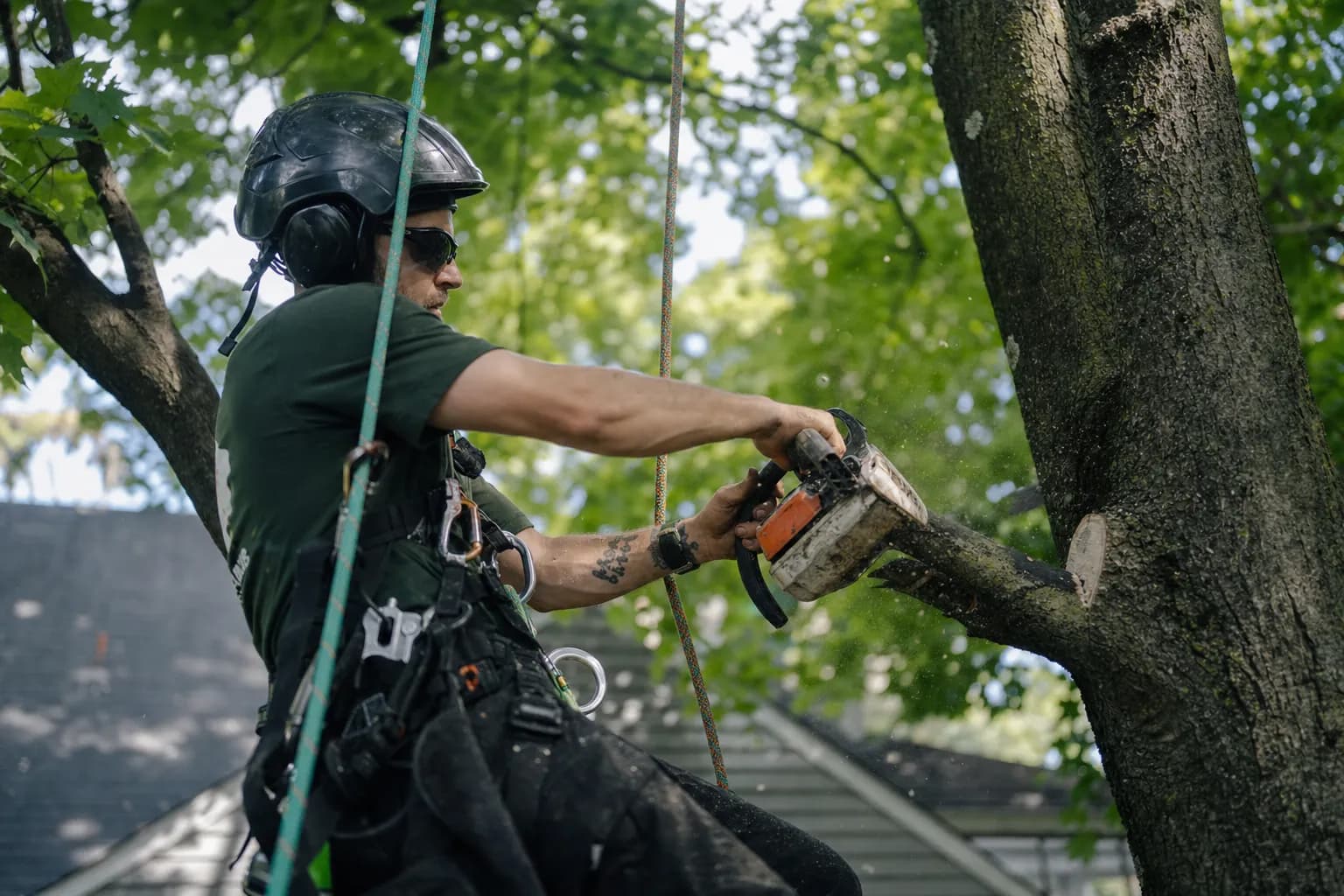
Tree service is dangerous, loud, and physically demanding work. When your climber is 60 feet up in a harness with a running chainsaw, nobody is reaching the phone — and neither is the groundsman feeding the chipper below. After a storm drops a white oak across an entire block, your line rings wall-to-wall while every truck is already out on emergency removals. The calls you miss during those surges are your highest-value jobs: homeowners with a tree on a roof or a car who need someone now, not a voicemail they have to call back. A tree service virtual receptionist answers every call, triages storm emergencies from routine trim requests, captures the property detail your estimator needs, and books the appointment while your crew stays focused on the work that pays.
Storm Damage Surge Without Burning Out Your Team
A single severe storm can generate a week's worth of calls in 24 hours. Downed trees blocking driveways, limbs pinning cars, split trunks leaning toward utility lines, branches poking through roofs — every affected homeowner is calling simultaneously, and the most urgent ones will hire whoever picks up first. A tree service answering service powered by AI handles the flood without adding staff or pulling your foreman off the job site to manage the phone. It captures the hazard type, urgency, address, and access details for each caller. Real emergencies — trees on structures, blocking roads, or contacting power lines — get flagged for immediate dispatch and noted for utility notification if needed. Routine cleanup, scheduled trimming, and stump grinding requests get queued for the next available crew slot. Your climbers stay focused on the most dangerous and profitable jobs while every caller hears a calm, professional voice.
Hazard Assessment, Permits, and Estimate Scheduling
Tree removal is a high-ticket service — a large hardwood removal close to a structure often runs several thousand dollars, and a full property cleanup after a storm can run more. Many of these leads start with a worried homeowner calling about a leaning silver maple or a dead elm they've been meaning to remove. If that call goes unanswered, they call the next arborist on the list. An AI receptionist for tree services captures the tree species and approximate size, proximity to the house, fence, or power service drop, the nature of the concern, stump disposition, and whether the property has deed restrictions or protected-tree ordinances that require a permit before work begins. When your estimator arrives they already know what they are looking at — right tree, right equipment, right crew size — and can produce an accurate bid on the first visit. Speed-to-estimate wins the job more often than the lowest price.
Municipal and Commercial Tree Contracts
The steadiest revenue for tree service companies comes from commercial and municipal contracts — HOA common-area maintenance, utility right-of-way clearing, municipal park tree care, and commercial property management. These clients run on schedules and expect immediate answers when they call about a hazard or a maintenance window change. A facilities manager who can't reach you during a storm event will find someone who can, and that replacement often inherits the rest of the contract. An AI virtual receptionist ensures every commercial call is answered, the scope and site address are captured, and the job is queued for the right crew size. It also keeps the after-hours line covered for emergency call-outs — the kind that can turn a one-time storm job into a preferred-vendor relationship.
Tree Service Resources
Best Answering Service for Tree Service Companies
Compare AI, virtual receptionist, and call center options for arborists.
How Much Does an AI Answering Service Cost?
Full pricing breakdown for AI, virtual receptionist, and traditional services.
Why Service Businesses Miss Calls
Storm season means more calls — here is how tree services capture every emergency lead.
Complete Guide to AI Phone Answering
Everything you need to know about AI receptionists for service businesses.
Put Callbook on your tree service line before the next storm rolls through.
Start with overflow or after-hours calls, test the hazard-intake script, then go live when the handoff is right.
Tree service answering service by city
AI Receptionist for Other Industries
What are missed calls costing you?
Estimate the revenue slipping to voicemail. Every figure here is your own number — nothing is averaged, assumed, or pulled from other businesses.
What is a tree service answering service?
A tree service answering service answers calls 24/7 for trimming, removal, storm-damage cleanup, and stump-grinding quotes. Instead of homeowners reaching voicemail after a storm or during office hours, a receptionist captures the tree type, property size, and urgency level, and books appointments on your calendar so you stay booked through peak season and never lose emergency or high-value removal jobs.
See how an AI answering service compares to a traditional one →